A long-nose golf club is the wooden club of the old game: a long, slender, shallow head with a gently sloping face and a low sole, spliced onto a springy shaft of ash, hazel or hickory. It was shaped at a clubmaker’s bench using the ordinary tools of a joiner, saws, drawknives, spokeshaves, planes, rasps and files, because the trade grew out of everyday woodworking rather than a workshop built for golf alone.
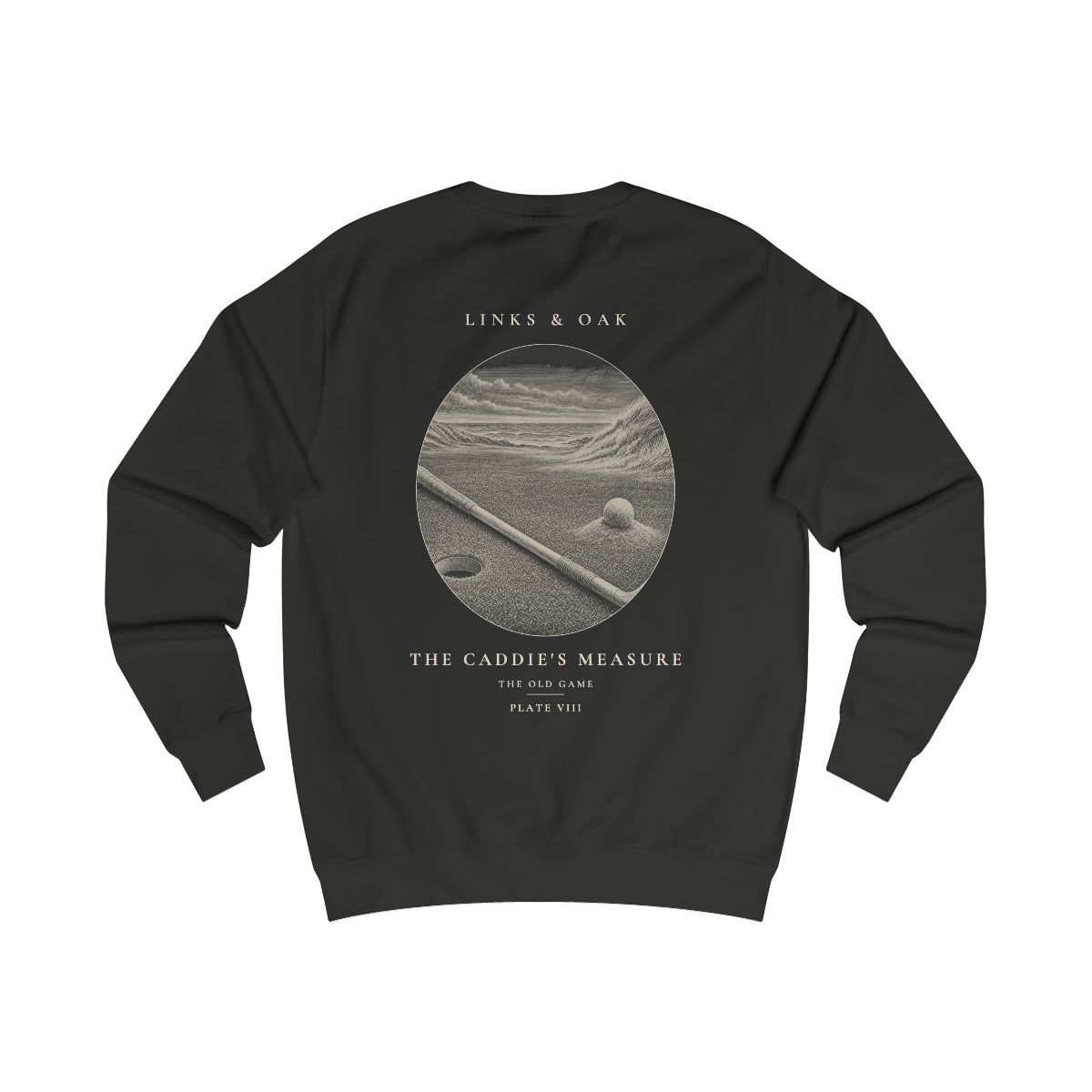
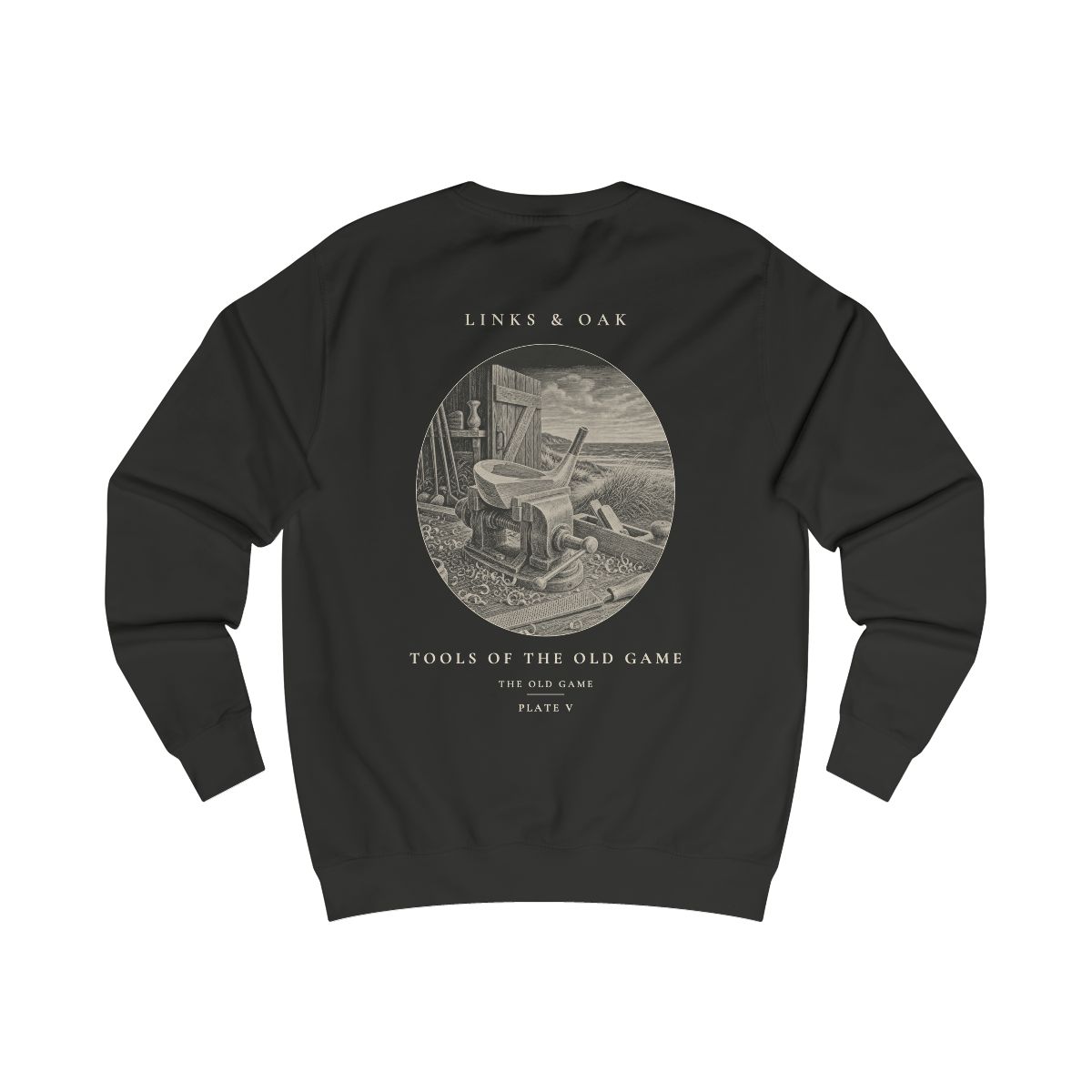
We made a plate called “Tools of the Old Game” because that bench deserves better than a passing mention. It is our own artwork, drawn in the style of an old engraving, not a record of any one real workshop. What follows is the history behind it, and we have kept to what the sources support. Where the trail goes cold, we say so.
Bowmakers first, then clubmakers
Golf’s early paper trail is thin, and much of it comes from officials who were annoyed. In 1457 the Scottish Parliament, under James II, ordered that football and golf should be “utterly cryit doune”, because men were playing them when they ought to have been practising archery. That is a real Act, and it tells us two things. Golf was already popular enough to worry a king, and the people who made bows had a professional interest in the outcome.
The link is not just a neat story. The Lord High Treasurer’s accounts for Scotland record that in September 1502 James IV bought golf clubs from a bowmaker in Perth. By then the ban had long been forgotten, and the king himself was playing. The maker of those clubs was a craftsman who already knew how to work seasoned wood, shape it to a purpose and test it for strain. That is a fair description of a clubmaker too.
A little later comes a name we can attach to a title. William Mayne of Edinburgh was appointed royal clubmaker to James VI in 1603 and is recorded in the same role under his son, Charles I. It is one of the earliest named clubmakers in the record, and it shows that by the start of the seventeenth century the trade had a place at court.
We know a great deal less about the ordinary makers of those years, and we would rather admit that than dress up guesses. Most of them worked as joiners, carpenters, bowyers and wheelwrights. Golf clubs were one line of work among several, made in the same shop as everything else.
What was a long-nose golf club?
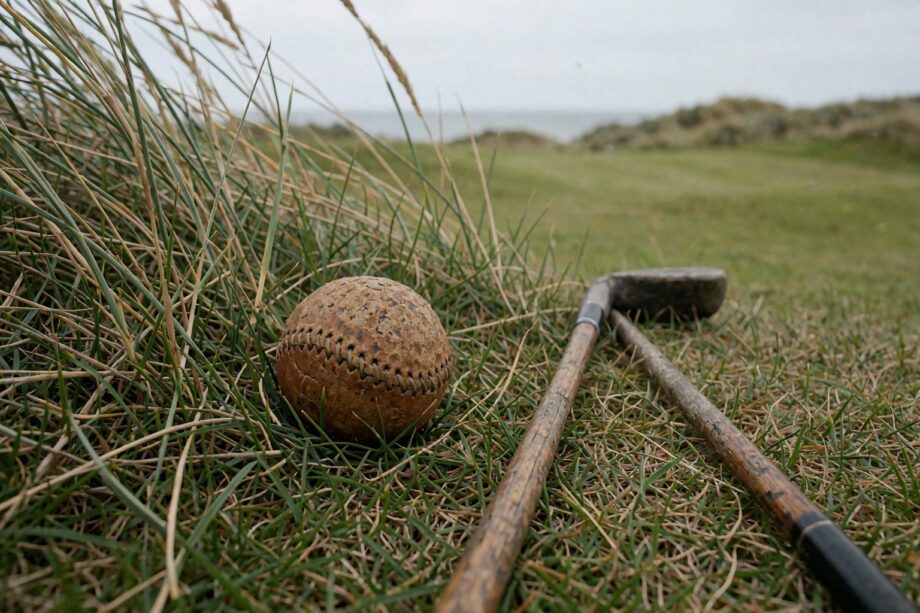
“Long nose” is the name collectors and historians give to the wooden clubs of the old game, and it describes the head exactly. The head was long, slender and shallow from heel to toe, with a gently sloping face and a sole that sat low to the turf. It looks nothing like a modern wood. It was made for a ball that was very different, and for ground that was very different too.
The clubs came in a family of jobs. The play club was the long driving club. Spoons, in long, middle and short lengths, had more loft and were used for shorter carries and for lifting the ball from a poor lie. The baffing spoon was the short, lofted club for the approach. The names look odd on the page, but they sound like a tool chest, which is exactly what a golfer’s set of the time was.
The heads were carved from hardwoods with a dense, tough grain. Beech was common, and fruit woods such as apple and pear were used as well, along with thorn. A head takes a hard knock at the ball, and the wood has to survive it. Late in the nineteenth century, American persimmon, a kind of dogwood, arrived and eventually became the standard for wooden heads. Long after that it gave the club its “persimmon” nickname.
Shafts were a different wood altogether, because a shaft has a different job. It needs to flex and recover. Ash and hazel were the usual choices in the older clubs, and they were valued for their spring. From the middle of the nineteenth century, hickory imported from North America gradually took over, and it stayed the shaft wood of choice into the early twentieth century, until steel replaced it. If you have ever handled a hickory-shafted club, you will know why makers preferred it. It feels alive in the hand.
What tools did a clubmaker use?
A clubmaker’s bench was, in most ways, an ordinary woodworker’s bench. The tools were the everyday kit of a joiner: saws to cut the blank, a drawknife and spokeshave to take it down to shape, planes, rasps and files to refine the curves, then glasspaper to finish. Nothing on it was made specially for golf. What made it a clubmaker’s bench was the eye of the person standing at it.
The trickiest job was joining head to shaft. Instead of drilling a hole through the head and pushing the shaft in, as later wooden clubs did, the old makers used a long spliced joint, often called a scarf or splice. The head and the shaft were each cut with a long, matching taper, glued together and then bound tightly with waxed or pitched twine, known as whipping. It was done that way for good reason. A long joint spreads the shock over a good length of wood, which is far kinder to a shaft than a single short one.
Two more touches turn up again and again on surviving heads and in the descriptions of them. One was a piece of horn set into the sole, which protected the wood from wear and from the scuffing of hard ground. The other was lead, poured into a hollow cut in the back of the head, which shifted weight where the maker wanted it. Both are the sort of quiet detail you only see if you are looking closely at a real club, and it is why we wanted a bench scene rather than a picture of a club alone. The last job was the grip, a wrap of leather over the top of the shaft, and then the club was ready to be handed over.
A word of caution on how much of this can be pinned to a date. We can say confidently that splice joints, horn soles and lead weighting were part of the wooden club by the nineteenth century, because clubs survive to show it. We cannot always tell you which maker did which trick first, and it is best to treat any tidy claim about that with suspicion.
Named makers of the early game
By the nineteenth century, clubmakers begin to emerge as individuals with reputations, and the record becomes much richer. The best known is Hugh Philp of St Andrews, who lived from 1782 to 1856. He was a carpenter by training, and in 1819 he was appointed clubmaker to the Society of St Andrews Golfers. His clubs are still prized, and a Philp head is among the most sought after pieces in the collecting world. After his death, the business was carried on by Robert Forgan, who went on to build the Forgan name into one of the best known in the trade.
Philp was not alone. Musselburgh had its own makers, and the McEwan family of clubmakers, working in Musselburgh and later Edinburgh, were well regarded in their day. Their names turn up on surviving clubs and in the collecting literature. We have deliberately left out dates and family details here, because the popular accounts vary and we would rather give you less than give you a muddle.
It is worth remembering that the early makers often worked closely with the great players. Old Tom Morris, who served his apprenticeship with Allan Robertson of St Andrews, made clubs and balls alongside his playing. In the small world of the old game, the man at the bench and the man on the tee were often the same person, or lived a few doors apart.
Why did clubmakers stop making clubs by hand?
The old clubs were designed around the feather-stuffed ball, the “featherie”, which was made by hand from a leather case packed with boiled feathers. It was light, expensive and easily cut, so a delicate long-nose club was kind to it. In 1848, the gutta-percha ball, the “gutty”, began to replace it. It was cheaper and more durable, and it could be made in far greater numbers. Golf spread widely because of it, and clubmakers were pushed to adapt.
The gutty was harder than a featherie, so heads grew shorter and deeper, faces were strengthened, and more clubs were made with iron heads. Later, the Haskell ball, with its rubber core, arrived around the turn of the twentieth century, and it changed the game once again. The long-nose club gave way to the compact wooden club that most people would recognise as the ancestor of today’s woods.
Then the bench itself began to give way. As the game expanded across Britain and abroad, demand outran what a single craftsman could cut by hand, and machines and factories took over the roughing out of heads. Hand finishing continued for a while, but the age of the lone maker at his bench had passed. That makes the old scene worth remembering rather than merely admiring.
If you like the idea of a golf history where wood, tools and patient hands are the stars, the “Tools of the Old Game” plate is our way of putting that bench on a garment. It is our own engraving-style artwork, printed to order in the UK or the USA. You will find it on the site through the link below.
See it in the collection: The Tools of the Old Game design