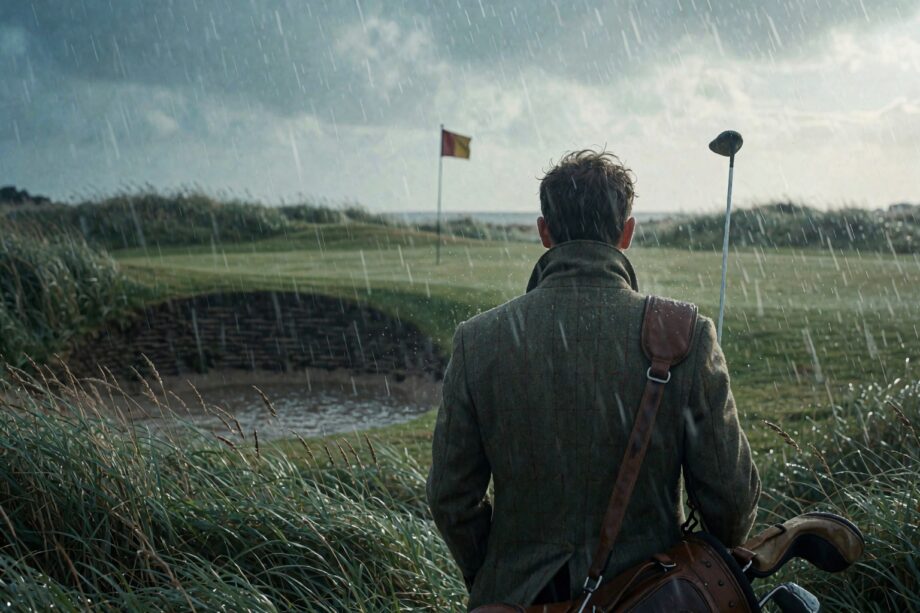
Golfers stayed warm and reasonably dry by dressing in whatever tough, woollen clothes they already owned, then, from the late nineteenth century, in tweed jackets, knickerbockers and plus fours, oilskins and waxed cotton, and eventually the waterproof membranes such as Gore-Tex that reached the wider public from the 1970s. Wool kept its warmth even when wet, tweed turned the wind, and oiled or waxed cotton kept the worst of the rain off until synthetic fabrics finally did the job properly.
The old game was played on links, the rough, sandy, grassy ground that lies between the beach and the farmland, and it offers almost nothing in the way of shelter. No trees, few walls, and a sky that can change its mind three times before you reach the turn. What people wore tells you a good deal about the game, and about how ordinary people coped with weather before anyone had invented a proper waterproof.
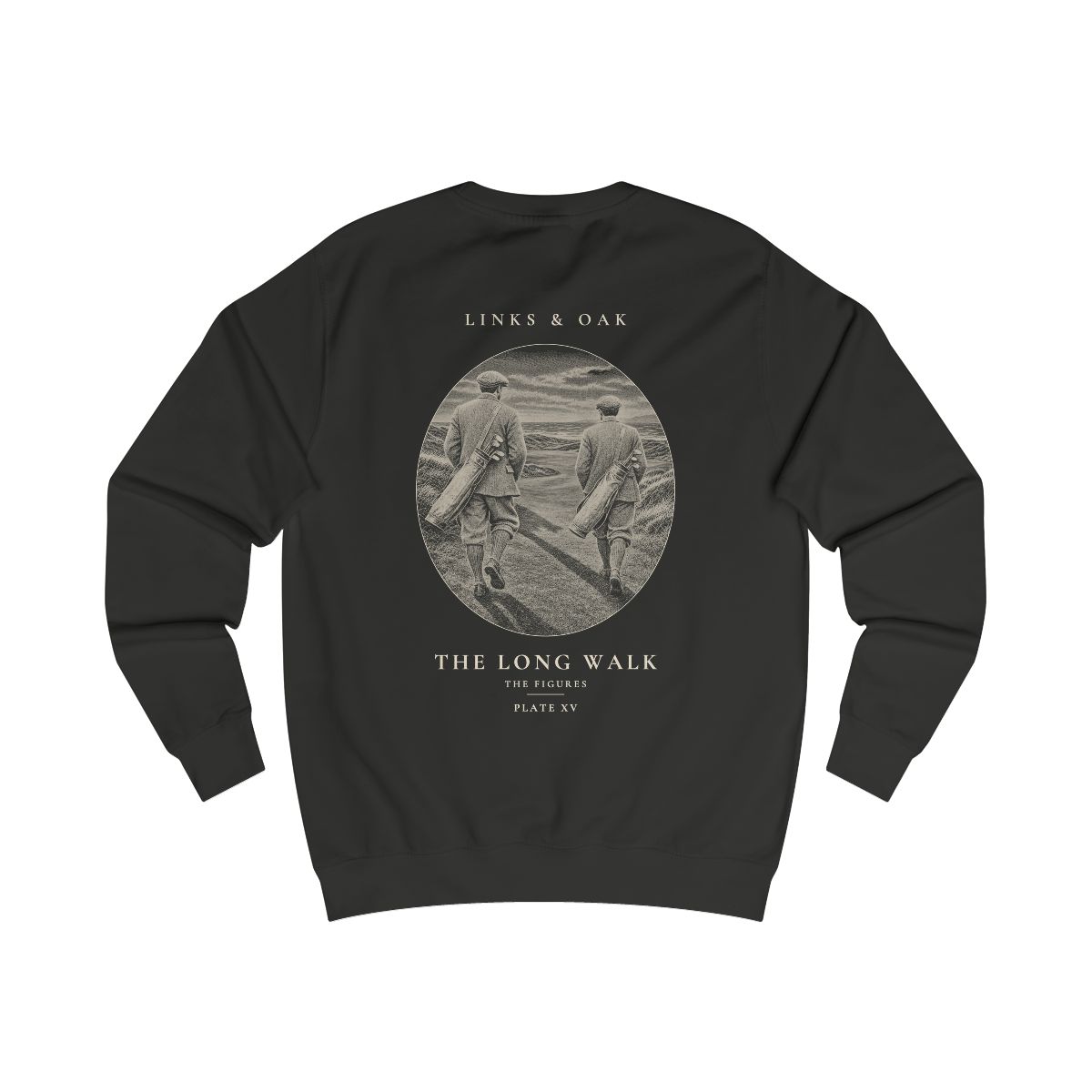
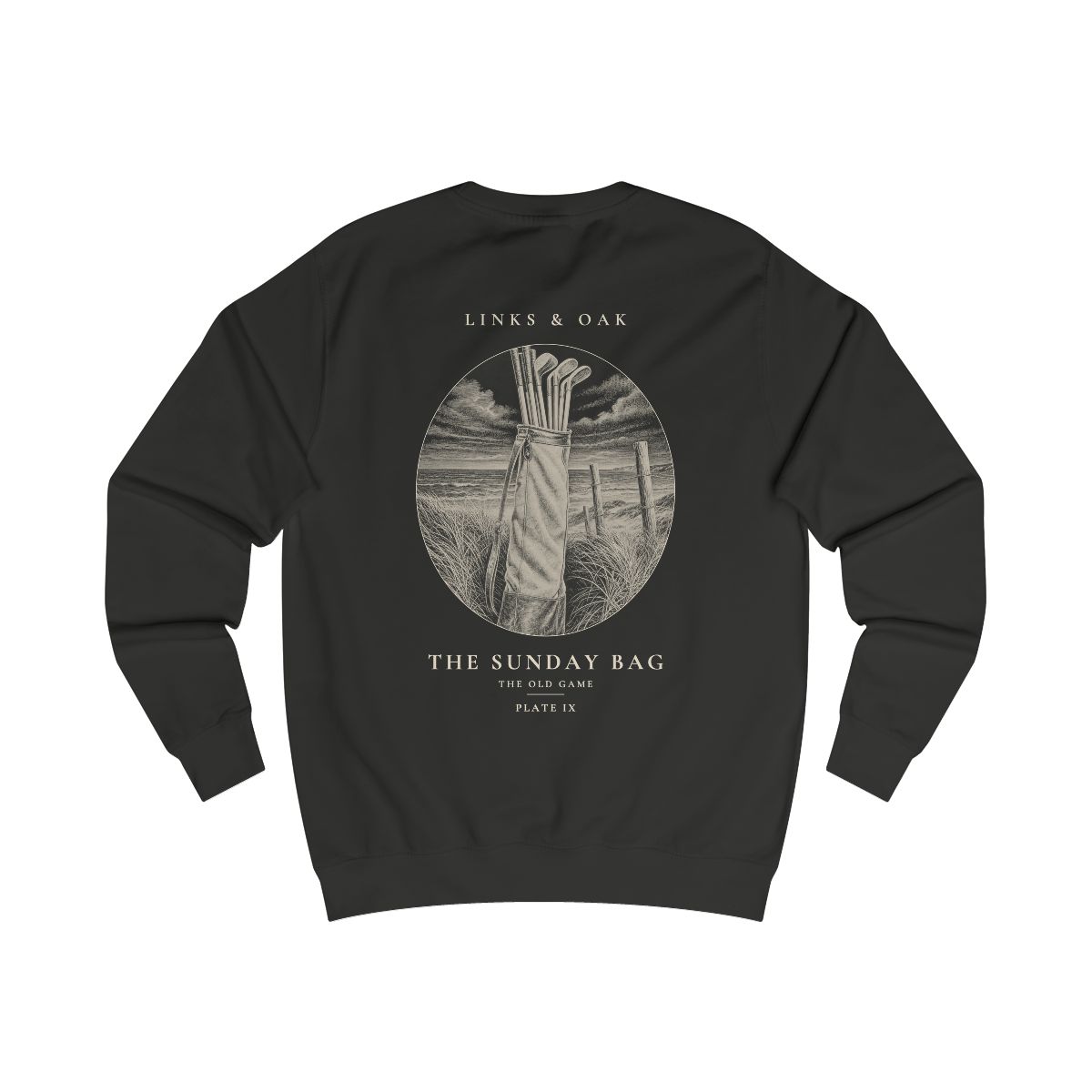
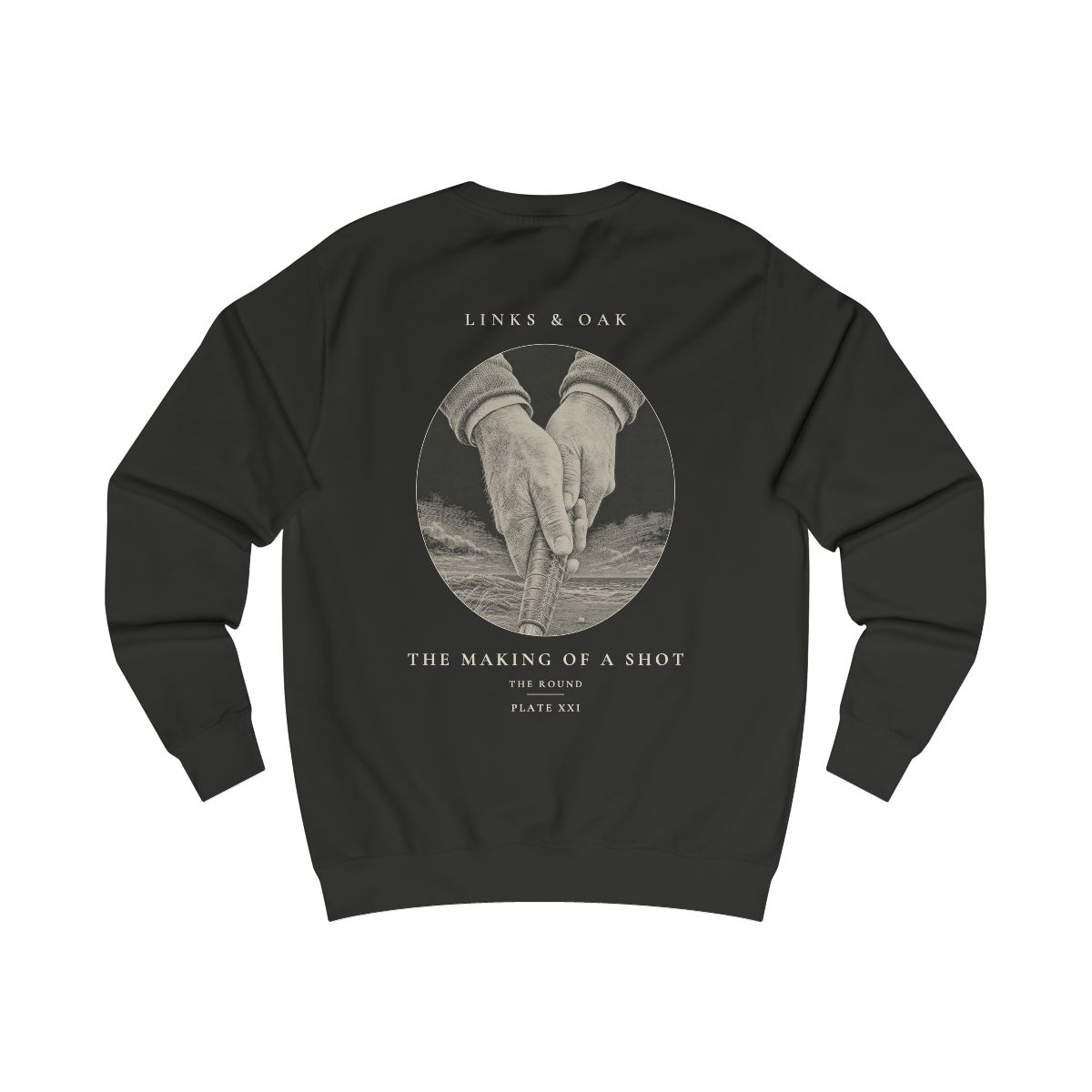
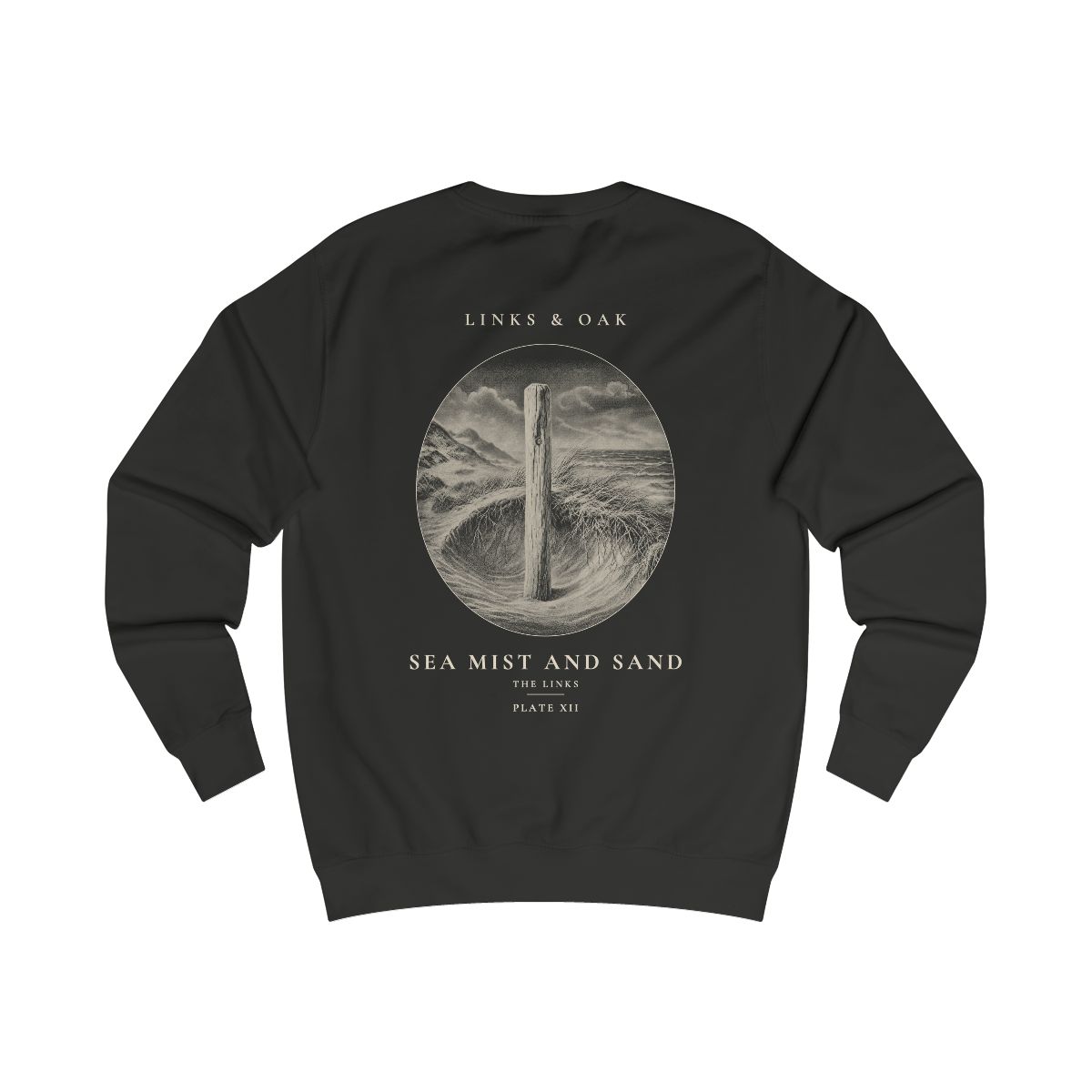
We made a plate called “Played in All Weathers” around this idea, and this article is the real story behind the scene. It is our own digital artwork, drawn in the style of an old engraving, not an antique, not hand engraved, and it does not show any real named course. The history below, though, is real, and I have kept to the parts that can be properly supported.
Everyday clothes, made to work harder
The first thing to understand is that early golfers did not have golf clothes. There was no such category. They played in what they wore for the rest of the week: a coat, a waistcoat, breeches or trousers, stockings, sturdy leather shoes and a hat. Wool was the fabric of the age, and that mattered enormously on a wet day.
Wool does something clever. It can take on a good deal of moisture and still feel warmer against the skin than most other fabrics would in the same state. It also sheds a fair amount of light rain off its surface, especially when it is woven tightly. Nobody in the seventeenth or eighteenth century was thinking about the science. They simply knew, from experience, that a wet wool coat was miserable but survivable, and a wet linen one was worse.
Clothing was also a matter of belonging. Many golfing societies and clubs had their own coats, often in a bright colour, and members wore them on the course. Historians and clubs give different reasons for this, from simple pride in membership to being easy to spot on open ground, and I would rather not pretend the question is settled. What we can say is that the golf coat was tailored, woollen and meant to be worn outdoors in all sorts of conditions.
The women who played faced a harder task. By the nineteenth century women’s golf was well established in Britain, and the Ladies’ Golf Union was founded in 1893. Yet the dress of the day meant long skirts, and long skirts and wet grass are an unhappy combination. Women adapted as they always do: sturdier fabrics, shorter hems where they could get away with it, and jackets cut to allow a proper swing. The full story of how far the fashion of the time held them back is a long one, and it deserves its own article.
Why do golfers wear tweed?
If one fabric belongs to golf’s long weather story, it is tweed. A rough, hard wearing woollen cloth, woven in Scotland and the north of England among other places, tweed was made for people who worked and walked outdoors. Golf borrowed it without any fuss.
Its virtues are easy to list. It is dense enough to turn wind. It is thick enough to keep you warm. It lasts for years, and it takes the wear of a golf bag on the shoulder. The colours, too, were practical: heathers, browns, greens and greys that hid the mud and matched the landscape.
By the late nineteenth and early twentieth centuries, the tweed Norfolk jacket had become a familiar sight on courses. It had pleats at the back to give the arms room and often a belt, which suited a game that asks for a full rotation of the shoulders. With it came knickerbockers, baggy trousers gathered below the knee and worn with long woollen stockings. Trousers that stop at the knee are a sensible idea when the grass is soaking, because there is less cloth to drag the wet up your legs.
Then came the famous ones. Plus fours were knickerbockers cut longer, so that they hung over the knee, and the name is usually explained by the extra four inches of cloth. They became a defining look of golf in the 1920s. The Prince of Wales, later Edward VIII, is often credited with helping to make them fashionable, and he is also associated with bringing the Fair Isle knitted jumper into golf wear in that period. I would treat the exact details of who started what with some caution, as these stories tend to grow in the telling, but the general picture is well recorded: the 1920s was when golf clothing became a matter of style as well as sense.
Knitwear deserves its own credit. A good wool jumper or cardigan gave golfers a layer they could put on and take off as the weather turned, and layering is still the best advice anyone can give you about playing in changeable conditions. Add a flat cap or a tweed one with a peak to keep the rain out of your eyes, and you have the classic picture: someone in wool, hunched slightly against the wind, playing on regardless.
What did golfers wear to stay dry before waterproofs existed?
Wool and tweed kept you warm, but they did not keep you dry, and for a long time nothing did so completely. The trouble with waterproofing was always that what kept the water out also kept the sweat in.
One breakthrough came in 1823, when the Scottish chemist Charles Macintosh patented a waterproof cloth made by joining layers of fabric with a rubber solution. The raincoat that took his name is still called a mac in Britain today. It was effective, but it could be stiff, hot and smelly, and it was hardly what you would want to swing a club in.
The other tradition was oil. Cotton could be treated with oil to shed water, and the result, oilskin, was used by sailors and fishermen and anyone else who worked in wet weather. Waxed cotton grew out of the same idea. The Barbour company, for example, began in South Shields in 1894 supplying weatherproof clothing for mariners, and waxed jackets of that kind later became a familiar outdoor garment across Britain. They are heavy, they smell of wax, and they work. Golfers who could afford them wore them over their tweeds, and caddies, who carried the bags in every kind of weather, often made do with whatever thick, oily, patched-up cloth they could get.
So the scene on a very wet day, a hundred years ago or so, would have been a mixture: an oilskin or waxed coat on top, wool beneath, a cap pulled down, and perhaps an umbrella held over the bag. It was not comfortable. It was effective enough, and the players were used to it.
When did the modern waterproof golf jacket appear?
The next great change was not in how clothes looked but in what they were made of. Through the twentieth century, new synthetic fabrics arrived, lighter than tweed and quicker to dry than wool. Nylon and other man made fibres made it possible to build a waterproof jacket that did not weigh as much as a small dog.
The real step forward for wet weather came with the waterproof, breathable membrane. The material now known as Gore-Tex was developed from work in the late 1960s, and jackets using it reached the wider public from the 1970s. The trick is a thin layer with pores small enough to keep liquid rain out and big enough to let water vapour from your body escape. For the first time, it was possible to stay dry from both directions, at least in theory. Golfers, who spend hours outdoors at a walking pace, were an obvious market, and waterproof jackets and trousers became standard kit in the bag.
Look at a modern course on a wet morning and you will see how much has changed. Bright, light shells. Fitted trousers that wipe clean. Gloves designed to grip in the wet. The knickerbockers and Norfolk jackets have mostly gone, though you will still find people who love wearing tweed and wool, some of them because it looks right, and some because it works.
What has not changed is the weather. Wind still finds the gap between your collar and your neck. Rain still arrives sideways. The links still offers no shelter. The basic answer is the one golfers found generations ago: layers, something to turn the wind, something to keep the rain off, and a stubborn refusal to go home early.
Why the scene still appeals
Ask people who love the old game what they like about it, and many will mention the weather, oddly enough. There is something honest about playing in it. The dress of earlier golfers, wool and tweed and oiled cloth, looks handsome now partly because it was made to do a job and had no other ambition. Nothing about it was designed to be a fashion. It simply became one, the way work clothes often do.
That is what our plate “Played in All Weathers” tries to catch: the small determined figures, the coats and caps, the sense of a game played whatever the sky is doing. Because it is engraving-style artwork that we made ourselves, it borrows the look of old prints without claiming to be one. If the history above has made you fond of the wet and windy side of golf, you can see the design on the Links & Oak site, and you will find the link just below.
See it in the collection: The Played in All Weathers design