Golf has always been a long walk with a friend because the game began on Scotland’s links land, the sandy stretch between beach and farmland where players simply walked the natural ground from one hole to the next. That habit runs from the earliest written rules of 1744, through the foursomes format where two partners share a single ball, right up to today, when most golfers could ride a cart but still choose to walk.
We think about that a good deal at Links & Oak. Golf is odd among sports, because most of it is spent walking: the striking takes seconds, the walking takes hours. This piece is about where that walk came from and how it has survived.
Why did golf start on links land in Scotland?
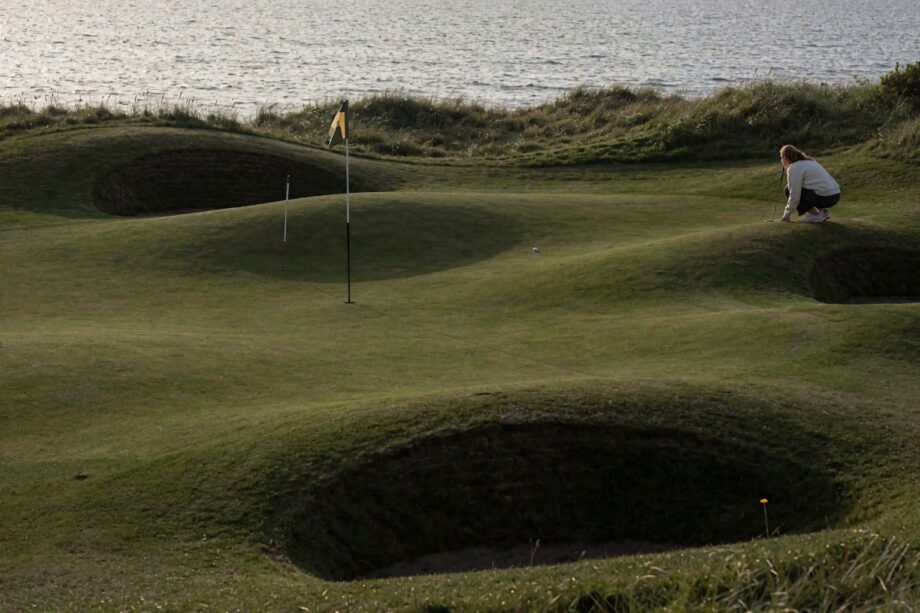
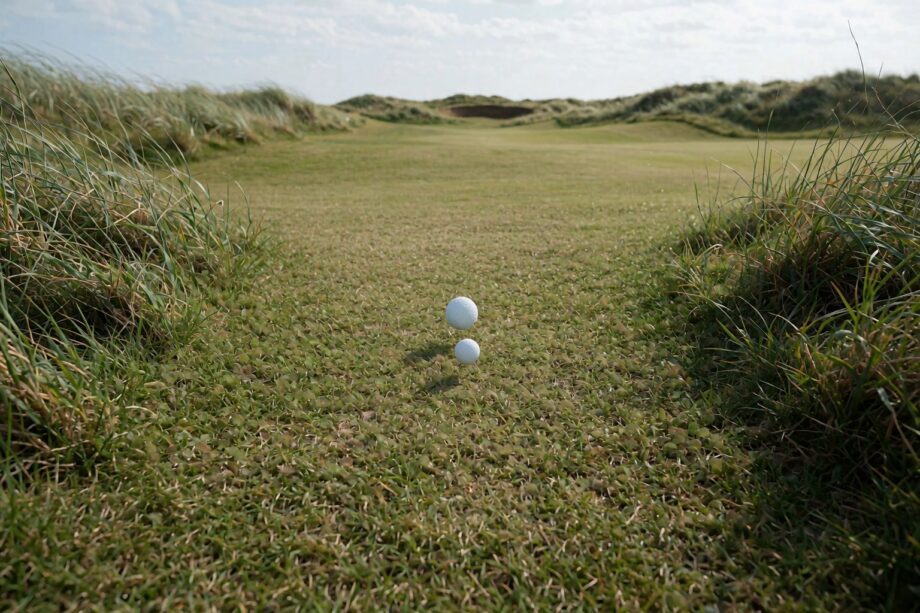
The game as we know it grew up on the east coast of Scotland, on what the Scots call links. The word comes from an old term for a ridge or rising ground, and it describes the strip of sandy, rough, wind-shaped land that lies between the beach and the farmland behind it. Nobody could plough it and nobody wanted to build on it. So it stayed open, and people found uses for it: grazing, rabbits, walking, and knocking a ball about with a stick.
That matters for the story of the walk. Nobody laid out the early courses in the sense we mean now. There were no architects with plans and no carefully shaped greens. Players followed the natural ground, going out along the shore in one direction and coming back the other way. The holes were where the land allowed them to be, and the distance between them was whatever it was. You simply walked from one to the next.
We can say with confidence that golf was already popular enough in Scotland by 1457 to worry the authorities. In that year the Scottish Parliament, under James II, passed an act instructing that football and golf be stopped, because men were spending time on them that should have gone to archery practice. The act is one of the earliest written mentions of the game, and it tells us something plain: golf was already a common pastime, played by ordinary people, and the Crown wanted them back at the butts. The ban did not work. Later acts repeated the complaint, which is a fair sign that people kept playing.
Then there is the Old Course at St Andrews, which is where the walking tradition is easiest to see. For a long time it was played out along the shore and back again, and the number of holes was not fixed at eighteen. In 1764 the players at St Andrews reduced the first four holes to two, which brought the round down from twenty-two holes to eighteen. Other courses were shaped by their own habits, and the eighteen-hole round only slowly became the norm. What did not change was the way you got around it. You walked, out and then back, with the sea on one side of you and the wind in your face for half of it.
There is a lovely detail in how the town treated that ground. The Old Course has traditionally been closed to golf on Sundays, so that the townspeople could simply walk across it. The St Andrews Links Act of 1894 later helped secure the ground for the town. So the links were a place for walking well before they were a place for competition, and even now the walkers are part of the picture.
Why has golf always been played with a partner?
Walk a course alone and it is pleasant. Walk it with someone and it becomes something else. The oldest ways of playing golf were built around partnership, and that tells you how people saw the round.
The first written rules we have are a good example. In 1744 the Gentlemen Golfers of Leith, who later became the Honourable Company of Edinburgh Golfers, wrote down thirteen rules for a competition for a silver club. They were short. They said things like play your ball as it lies, and they were meant for players who were going to spend an afternoon together on the same stretch of ground. A rulebook of thirteen lines assumes that everyone knows how the game is played and that the people involved will settle small disagreements like sensible adults. It is a very walking-pace sort of document.
Foursomes, where two partners share a single ball and take turns to hit it, is one of the oldest forms of the game and is still played today. Think about what that asks of two people. You cannot stride off to your own ball, because there is only one. You walk together, you decide together, you stand side by side at the tee and then move off at the same pace. There is no better way to learn how a friend thinks. You find out very quickly who hurries and who dawdles, and who goes quiet after a bad shot.
Then there is the caddie, who was for centuries the other walking partner in the round. Someone had to carry the clubs, find the ball in rough ground, and tell you where the trouble was. The word is usually traced to the French word cadet, meaning a younger son or junior, and you will often hear a story tying it to Mary, Queen of Scots. We would treat that story with care. The French link for the word is widely accepted, but the neat tale attached to it is the sort of thing that has been repeated far more often than it has been proved, so we do not lean on it. What we can say is that the caddie was a fixture of the Scottish game, and that a good one knew the ground, the wind and the player.
The professionals of the nineteenth century show how close that partnership could be. Old Tom Morris, born in St Andrews in 1821, was a player, a club maker and a greenkeeper. He looked after the greens at Prestwick before returning to St Andrews as Keeper of the Green in 1865, and he lived until 1908. His whole working life was spent on foot, on links land, looking after the ground that others walked and played on. When the first Open Championship was held at Prestwick in 1860, it was played over the twelve holes of the course, and the players went round three times to make thirty-six holes in a day. Eight players took part, and Willie Park Senior won. Every one of them walked the whole way.
Why do golfers still walk instead of using a cart?
You might expect that the arrival of motor power would have finished the walking game. In some places it did change it a great deal. Motorised golf carts became common in the twentieth century, particularly in America, where courses were often spread out and the idea of riding between shots caught on. Plenty of people play that way and there is nothing wrong with it. Some players could not play at all without the help.
That last point has a real history behind it. In 2001 the United States Supreme Court ruled in the case of PGA Tour v. Martin that the golfer Casey Martin, who has a serious circulatory condition in his leg, was entitled to use a cart in professional competition. The court decided that walking was not so fundamental a part of the tournament that it could not be adjusted for a disabled player. It is a decision worth knowing, because it shows that the walk is a tradition and a pleasure, not a test that anyone must pass to belong in the game.
Even so, walking has stayed at the heart of it. The major championships are still walked by the players, each with a caddie beside them. Plenty of clubs, particularly on the old links, still expect members and visitors to go round on foot. And a great many ordinary golfers, given the choice, will pick the walk. It slows the day down. It gives the round a shape, with its own rhythm of effort and rest. It gives you time to look at where you are.
There is one more thing worth saying, and it is about a quote. You will often see the line that golf is a good walk spoiled attributed to Mark Twain. It is a lovely line, and it is repeated in clubhouses everywhere. But no one has been able to find it in his writing, and the attribution is generally regarded as unsupported. We are happy to leave it as a good joke with an unknown author. It also happens to make our point from the other side. The joke only works because everybody understands that the walk is the thing.
Why we drew it
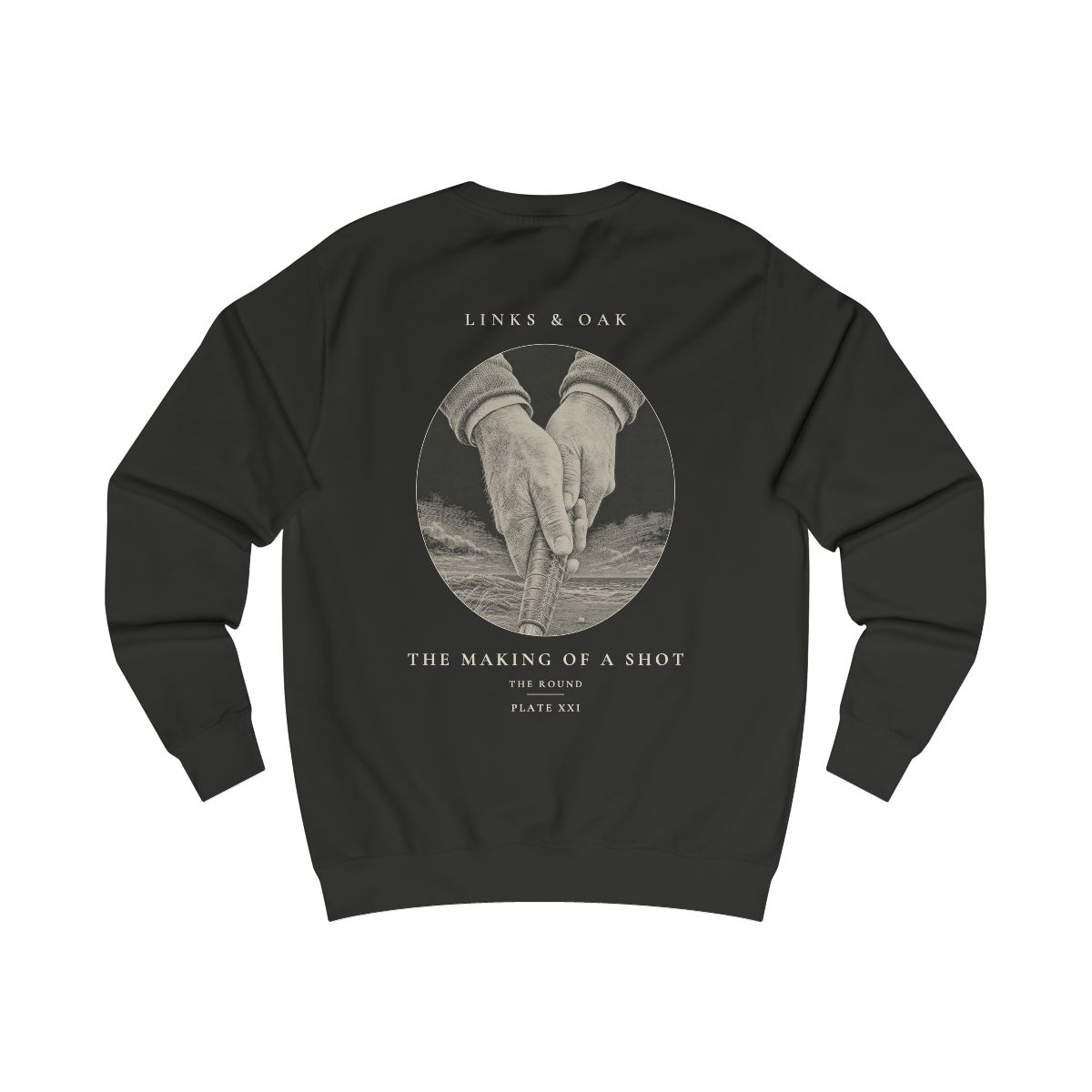
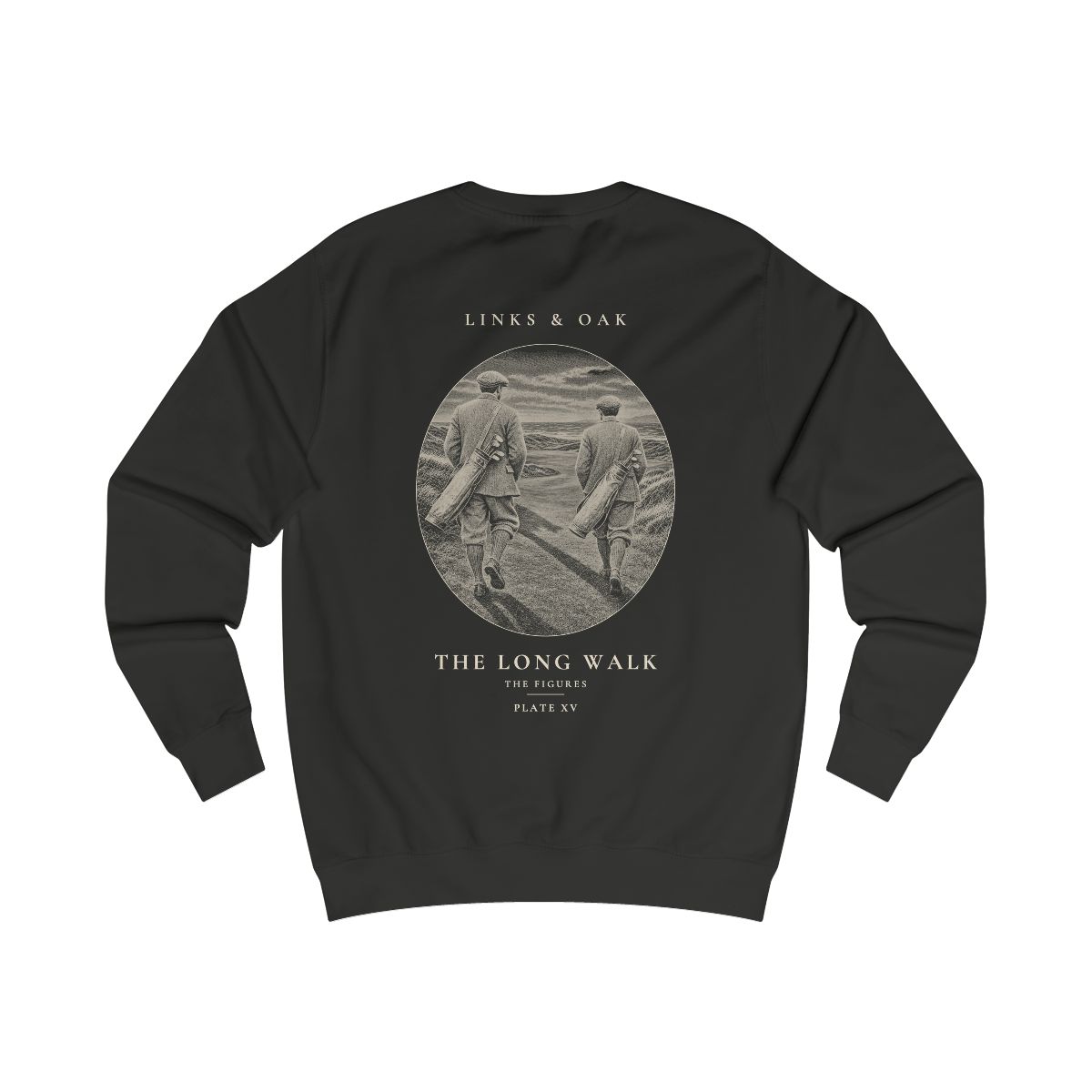
When we made the plate that shows this scene, we wanted the walk to be the subject, not the shot. Two figures, side by side, going along the ground together. No trophy, no drama, nobody in mid swing. Just the round as it has so often been: a partner, a bag, and a long way to go.
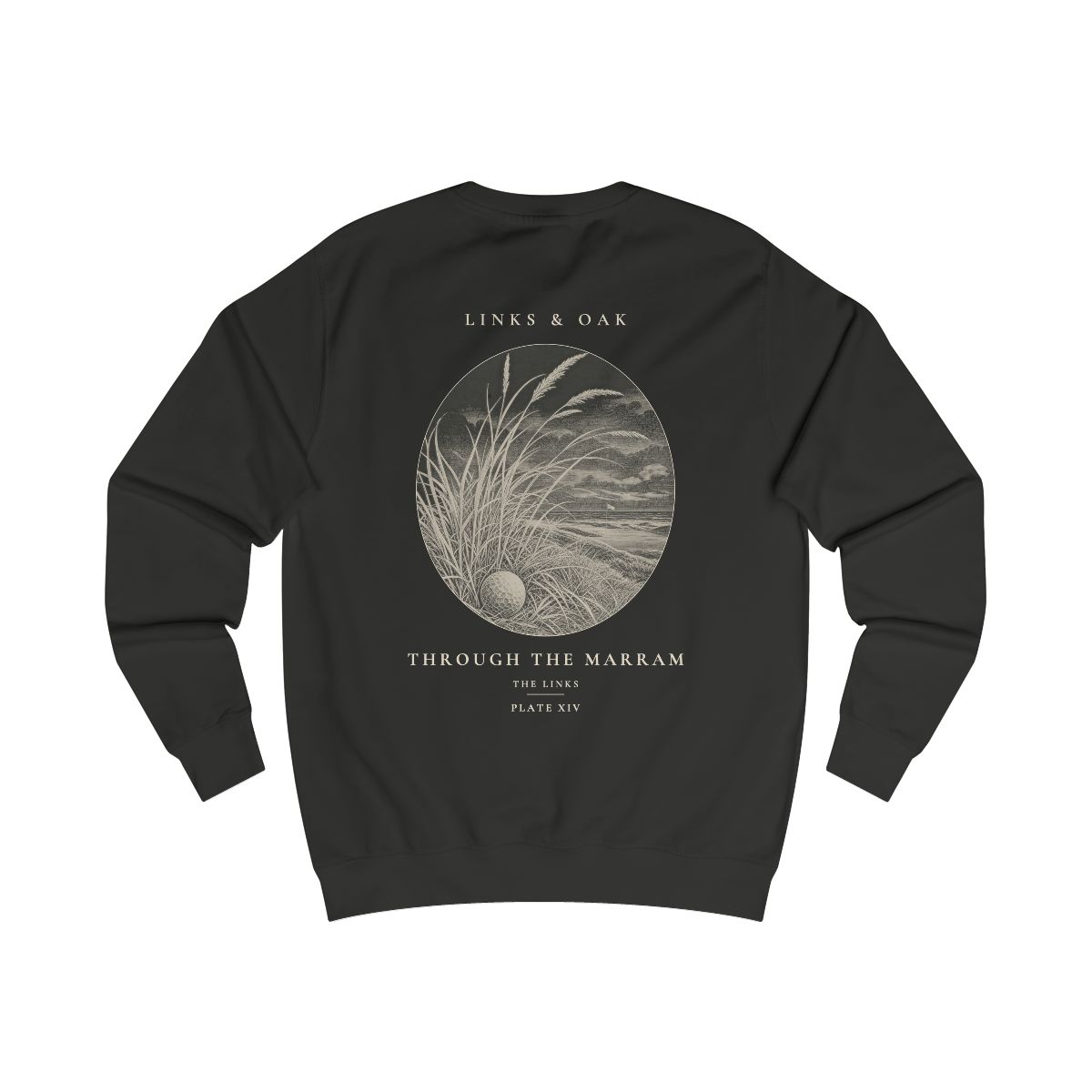
A quick word on what the artwork is, because we would rather be plain about it. It is digital artwork made in the style of an old engraving. It is not an antique, it was not engraved by hand, and it does not show any real named course. It is our own picture of an old idea, drawn with the fine lines and patient shading that the engraving tradition gave us, and printed on clothing for people who love the game.
If you have ever had the best conversation of the year somewhere between the fourth green and the fifth tee, you will know exactly what the plate is about. The design is linked below, and we hope it looks right on the person who has walked more rounds than they can count.
See it in the collection: The The Long Walk design